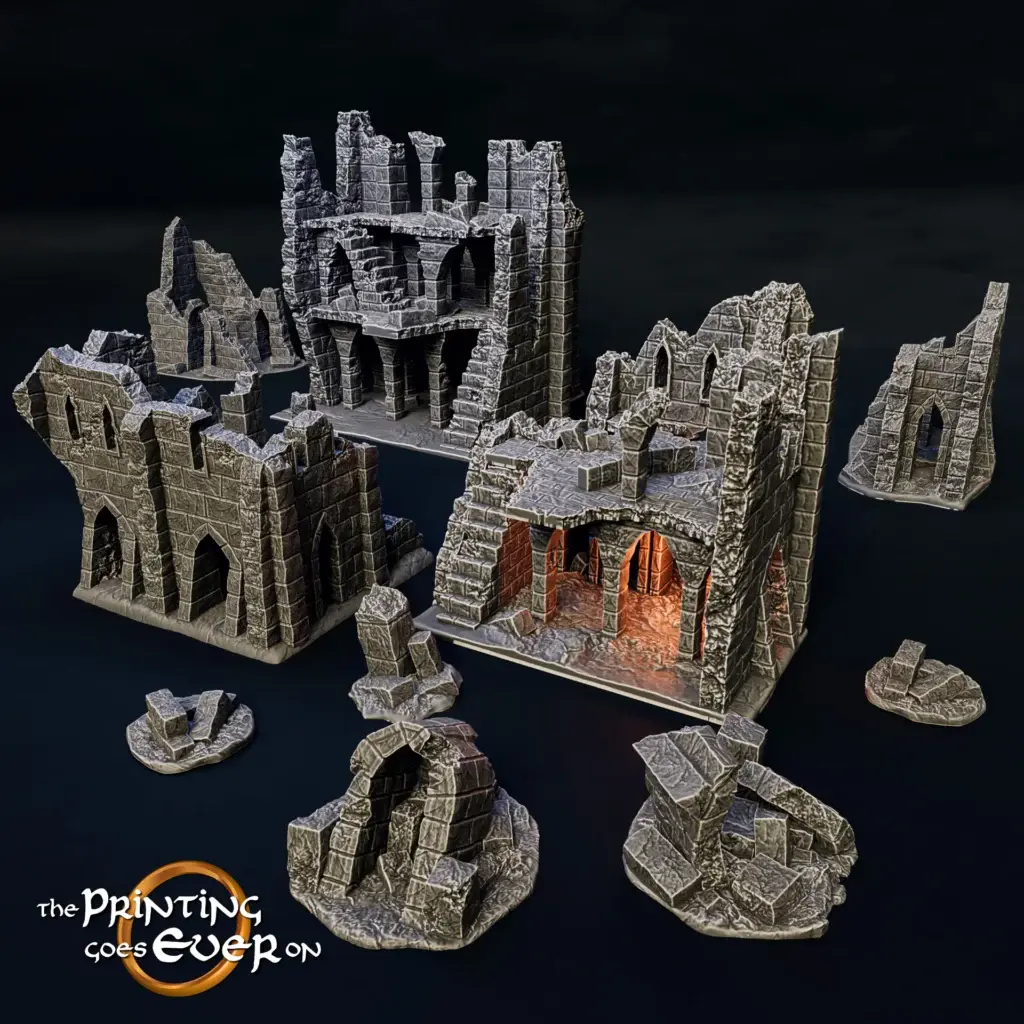
Creating Forest Ambush Scenes with Printable Trees, Ruins and Battlemaps
Forest ambush encounters add tactical depth to your sessions with layered terrain, hidden threats, and limited visibility. Using printable trees, ruins, and battlemaps, you can create interactive combat zones that challenge movement, strategy, and line-of-sight, all while keeping setup flexible and reusable across different campaign sessions.
Why Forest Ambushes Make Great 5e Encounter Setups
Forest ambushes work especially well in 5e because they naturally slow movement, create line-of-sight restrictions, and offer both cover and concealment elements that can make even a standard skirmish feel tense and dynamic. Whether your players are escorting a merchant caravan or venturing into unknown territory, a well-placed forest ambush offers meaningful choices.
Tactical terrain = more interesting combat.
You can raise the tension by placing threats where the players least expect them. The key? Use forest ambush terrain for DnD that takes advantage of visibility layers, elevation, and interactive cover. Ambushers can lie in wait among logs, ruined walls, or rocky outcroppings, ready to strike.
If you want to increase the challenge and the fun, plan your encounter around:
- Limited visibility due to dense props
- Split-path movement for different party members
- Hidden threats only revealed on a successful Perception check
A flat map won’t deliver this experience. That’s why using printable forest props for RPG helps you build memorable, reactive encounters your players will remember.
Must-Have STL Props for Woodland RPG Terrain
Not every forest terrain setup needs to be packed with detail, but a few smart pieces go a long way. A simple layout of trees and ruins can become deadly when the right terrain is used. If you’re wondering how to build woodland encounter terrain, start with printable pieces that offer cover, concealment, and visual storytelling.
Essential STL files for ambush scenes include:
- Trees with twisted roots and removable canopies
- Bushes and fallen branches that block movement
- Broken statues or crumbling ruin fragments
This is where terrain does more than just decorate; it becomes an integral part of the gameplay.
Adding a ruined forest terrain STL bundle lets you shape tactical flow. These models create natural chokepoints, elevation for ranged attackers, and hiding spots for traps or enemies. Since many STL files are modular, you can rotate or swap pieces between sessions, keeping your players guessing.
Using STL terrain = reusable setups for different campaigns.
Whether you’re printing large trees or overgrown ruins, make sure they align with your combat goals, defensive cover, blocked paths, or ambush trigger points. It’s not just scenery; it’s part of the encounter.
Building Modular Forest Scenes with Printable Trees and Rocks
Modularity is key when you want to reuse your terrain without having to repeat the same setup. With interchangeable parts like trees, rocks, and elevation pieces, you can build flexible ambush zones. Start by collecting STL trees and rocks for tabletop terrain that scale to standard 1-inch grids used in most RPGs.
Use larger tree trunks near map edges and place smaller vegetation near the center. This creates a layered scene that naturally draws players inward, where ambushers might be waiting.
Here’s what a modular forest encounter for 5e can offer:
- Sections that link seamlessly with existing battlemaps
- Dynamic scenery, you can rearrange between sessions
- Space-efficient storage for terrain-heavy tables
By combining battlemaps with printed props, you unlock freedom to adjust scenarios based on party level or narrative pacing. Want to change the battle difficulty? Add or remove cover. Need a faster flow? Swap in open ground tiles.
That’s the advantage of modularity it grows with your campaign.
And if you’re looking to expand even further, some terrain sets include broken carts, ruins, or campfires that can reinforce the ambush narrative while keeping your board flexible and fresh.
Using Ruins and Terrain to Create Line-of-Sight Challenges
Ruins aren’t just visual markers; they can change how players and enemies see the battlefield. Place broken walls between trees or line them up with elevation pieces to create sightline blockers. These are great for designing ambush scenarios with STL terrain because they allow enemies to hide, snipe, or split the party.
What makes ruins powerful in combat?
Control over movement and vision
A forest filled with ruins, stumps, and foliage isn’t easy to run through. Movement becomes cautious. Characters use cover. Players start asking questions like, “Is anyone behind that wall?” or “Can I climb that rock?”
Add forest ruins for fantasy campaigns to:
- Break up open paths between trees
- Create corners where enemies can lie in wait
- Allow tactical retreats or surprise reentries
Unlike a city street, forest ruins are uneven, half-buried, and organic. When printed, they blend with the rest of your terrain seamlessly. That makes every square on your map worth examining closely.
Your players may try to flank. Or they might walk into an ambush with no idea who’s waiting. Either way, you’re giving them an environment that requires choices, and that’s the kind of engagement every DM wants at the table.
How to Lay Out a Forest Trap Zone with Battlemaps
The visual base of your ambush scene is just as important as the 3D props you place on top. That’s where fantasy forest battlemaps and terrain come in. A solid battlemap provides the flexibility to accurately mark elevation, pathways, and tree placement, keeping the game flowing smoothly.
Here’s how to lay out a successful forest trap zone:
- Choose a map with blended textures (soil, moss, stone)
- Ensure grid lines don’t overpower visuals but stay visible
- Place terrain with purpose: cover, block, or funnel
A good building of a forest trap zone for RPG starts with considering movement and sight lines. Set traps along narrow paths. Place enemies behind ruins. Use elevation to break up visibility. The map should force players to react.
Printable maps with fog layers, streams, or overgrowth add depth. The more natural your ambush zone feels, the more cautious your players become. That hesitation makes the encounter more intense even before initiative is rolled.
And if your terrain is modular, you can switch out tiles between encounters, giving you a different challenge without redesigning everything.
Tips for Blending Forest Terrain with Existing Campaign Maps
Integrating new terrain into an ongoing campaign map isn’t just possible; it’s often easier than it looks. Whether your players are traveling through familiar woods or discovering new ones, blending in RPG terrain for forest combat works best when you consider continuity.
Ask yourself:
- Have players seen this region before? Use similar trees and ground texture.
- Is this forest near ruins? Add themed props that match local history.
- Was there a recent conflict? Place signs of battle arrows, campfires, and bodies.
By using trees and roots for DnD maps that resemble earlier environments, you create visual consistency. That builds immersion and reduces confusion at the table. If they’ve been here before, players will recognize terrain. If it’s new, they’ll still feel grounded in your world.
A good trick is to reuse props but rotate them or group them differently. That makes familiar pieces feel fresh again. You can also swap canopy tops or repaint elements to accommodate seasonal changes, such as green in summer and brown in fall.
And finally, don’t overfill your map. Leave breathing room so movement, attacks, and roleplay don’t get crowded out by terrain. Let the environment shape decisions, not block them.